Epistolary horror: the scariest stories told through documents
Epistolary horror is horror told entirely through documents: diaries, letters, police reports, transcripts, emails. There's no narrator to reassure you. You're simply left to eavesdrop on an unfolding story from the actual evidence.
In this guide we look at why the form suits horror so well, the classic and modern books that define it, and where it's heading next. If you're new to the wider form, start with our complete guide to epistolary novels.
Why does horror work so well in documents?
Documents feel real. In a documentary, archive footage and paperwork always carry more authority than any narrator. A diary entry or an incident report doesn't announce itself as fiction, so the reader's guard drops. Horror depends on that moment when you half-believe it.
They also create gaps. Every document is written by someone who doesn't know what happens next, and often by someone who doesn't survive. The reader sees what the writer missed, and fills the silences between documents – often with something worse than anything on the page.
Finally, documents make the reader the investigator. You piece the story together yourself, which means the dread is partly your own work.
What are the classic epistolary horror novels?
Dracula, Bram Stoker (1897). The foundation of the genre. The Count is never given a voice of his own; we only see him through journals, letters, newspaper cuttings and a ship's log. The log of the Demeter, drifting into Whitby with its crew gone, is still one of the most chilling passages in horror. The Count is never named in the captain's entries, but by the last page of the log you know exactly who's on that ship. More stories like Dracula.
The Call of Cthulhu, H.P. Lovecraft (1928). Presented as notes found among a dead man's papers, stitched together from his great-uncle's research, press clippings and a sailor's account. The horror comes from the documents slowly agreeing with each other.
Carrie, Stephen King (1974). King's first novel breaks up the story with news reports, book extracts and testimony from an official inquiry. You know roughly how it ends from the first few pages, so you spend the rest of the book waiting to find out what exactly happened, and the anticipation kills.
What are the best modern epistolary horror books?
House of Leaves, Mark Z. Danielewski (2000). A manuscript about a documentary that may not exist, annotated by a man slowly unravelling. Footnotes, appendices and pages that twist on themselves make the book itself feel haunted.
World War Z, Max Brooks (2006). A zombie apocalypse told as an oral history of interviews with survivors. It works because it reads like journalism, not fiction.
Dark Matter, Michelle Paver (2010). The journal of a young man on a 1937 Arctic expedition, left alone through the polar night. A quiet, slow-building ghost story.
The Last Days of Jack Sparks, Jason Arnopp (2016). The final manuscript of a cynical journalist investigating the supernatural, with notes added after his death.
Where else can you find found-document horror?
The form has moved well beyond books. The Blair Witch Project (1999) turned found footage into a film genre. Online, the SCP Foundation built a vast shared universe out of containment files and incident reports, written by thousands of contributors.
On YouTube, analog horror series such as Local 58, Marble Hornets and The Mandela Catalogue tell their stories through fake broadcasts, tapes and archive footage.
This is sometimes called found-document fiction, the modern descendant of the epistolary novel.
Can you read epistolary horror online?
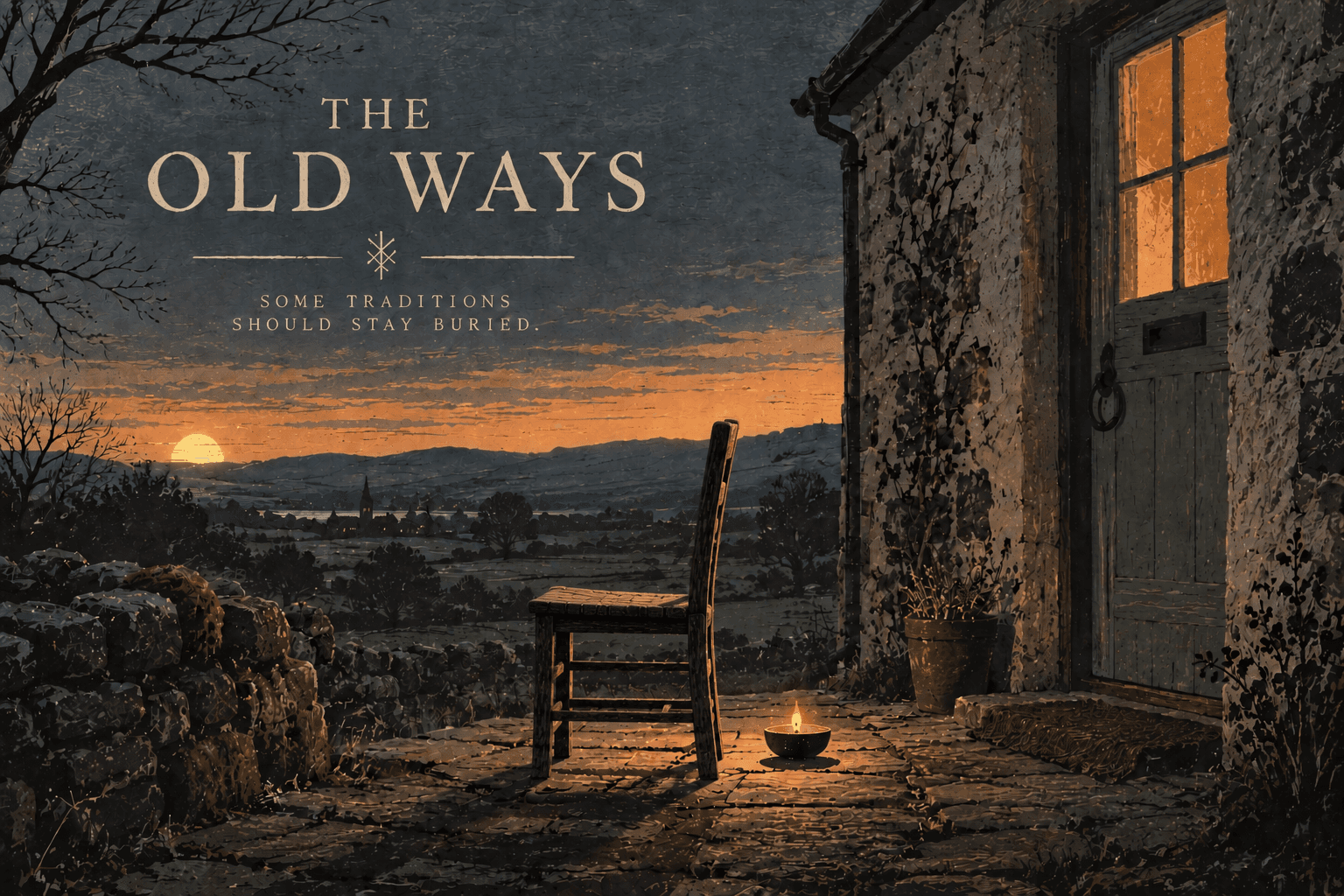
Yes. On Fictra, The Old Ways is a folk-horror story world told entirely through found documents. There are old ways of doing things in these villages. You don't have to understand them. You just have to follow them.
In The Chair, set in Wenlow, someone keeps putting a chair outside number 6, and Maya is told to leave it where it is. Her story unfolds through a Facebook post, text messages, an 1896 parish notebook and a 999 call transcript. Three more strands, The Leaving, The Procession and The Small Door, each take place in a different village.
Every document is written by a real person, and new ones are added as the world grows. It's free to read, along with the rest of our folk horror collection.
Epistolary horror FAQs
What does epistolary horror mean?
A horror story told through documents written inside the story, such as letters, diaries, reports or transcripts, rather than by a narrator.
Is Dracula epistolary?
Yes. Dracula is the most famous epistolary horror novel, told through journals, letters, newspaper cuttings and a ship's log.
What's the difference between epistolary and found-document fiction?
Epistolary traditionally means letters and diaries, as our guide to epistolary novels explains. Found-document fiction stretches the idea to any material a character might leave behind: emails, case files, recordings and texts.
Where can I read new epistolary horror?
Start with The Old Ways on Fictra, a free folk-horror world told through found documents. Or try writing a document of your own.